
 By Junu Bullion
When buying physical bullion, authenticity should matter just as much as the daily gold rate. An assay card is one of the most important documents attached to a gold bar, helping buyers confirm its purity, weight, refinery source, and identity. For first-time investors, understanding this small card can make the buying and selling process far safer.
An assay card is not merely decorative packaging. It is an authentication record that connects the bullion product to the refinery that produced it. It can also help protect the bar from damage, reduce counterfeit concerns, and support a smoother resale experience.
What Is a Gold Bar Assay Card?
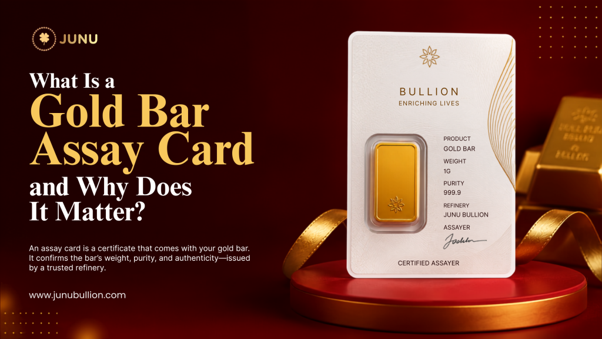
A gold bar assay card is a certificate or tamper-evident card that accompanies a minted gold bar. It is usually sealed around the product in protective packaging and contains information about the gold’s weight, purity, refinery, and authenticity.
In many cases, a gold bar is placed inside a laminated card that cannot be opened without damaging the seal. The front may display the brand name and product details, while the reverse can include security features, a serial number, QR code, or signature from the assayer.
An “assayer” is a professional or refinery department responsible for testing and certifying the metal’s composition. The assay card confirms that the manufacturer has tested the product and that it meets the claimed purity standard.
For example, a 10-gram bar may be marked as:
- Weight: 10 grams
- Purity: 999.9 fine gold
- Brand or refinery name
- Unique serial number
- Assay certification or security code
These details help both the buyer and a future reseller identify the product accurately.
What Information Does an Assay Card Contain?
The exact format varies by refinery, but a reliable assay card usually includes several key details. Before purchasing a gold bar, check that the card clearly displays the following information.
1. Gold Weight
The card should state the precise weight of the product, such as 1 gram, 5 grams, 10 grams, 20 grams, or 50 grams. Weight is essential because bullion value is calculated largely by the amount of pure gold it contains.
2. Purity or Fineness
Most investment-grade bars are available in high purity levels, commonly:
- 999 – 99.9% pure gold
- 999.9 – 99.99% pure gold
- 995 – 99.5% pure gold
This fineness mark helps confirm how much gold is present in the bar.
3. Refinery or Brand Name
Recognised refiners often place their logo, name, or trademark on the card and bar. Well-known brands can increase buyer confidence because they follow established production and quality-control processes.
4. Serial Number
A unique serial number is more common on larger products, though some smaller bars may also include one. When present, it helps identify a gold bar individually and may assist with resale, inventory records, insurance, or authenticity verification.
5. Security Features
Modern assay cards can include anti-counterfeit elements such as holograms, microprinting, QR codes, UV-reactive ink, security seals, or digital verification systems. These features make it harder for counterfeit products to pass as genuine bullion.
Why an Assay Card Matters for Buyers
An assay card gives buyers greater confidence in what they are purchasing. It provides important information at the time of sale and can remain valuable throughout the ownership period.
It supports authenticity
The primary value of an assay card is that it supports the claim that the bullion is genuine. While it is not a substitute for buying from a reputable dealer, a properly sealed card from a recognised refinery gives buyers an extra layer of reassurance.
If you are purchasing a gold bar online, this becomes particularly important. You may not be able to inspect the product in person before payment, so clear certification, protected packaging, and transparent seller policies matter greatly.
It helps with resale
Dealers often prefer bullion that remains in its original assay packaging. Sealed products are easier to inspect, authenticate, and resell. If the packaging has been damaged or removed, a buyer may need to test the product before offering a repurchase price.
This does not mean an opened bar has no value. Gold remains gold if it is genuine. However, damaged packaging can create delays, testing charges, or a less convenient selling process.
It improves record keeping
The information on the card can support your personal records. Keep photographs of the bar, serial number, invoice, and certificate in a secure digital location. These records may be helpful for insurance, estate planning, or tax documentation.
Assay Card vs. Invoice: What Is the Difference?
An assay card and an invoice are both important, but they serve different purposes.
| Document | Main Purpose |
| Assay Card | Verifies the bar’s weight, purity, brand, and authentication details |
| Invoice | Proves your purchase, price paid, date, seller details, and applicable taxes |
Ideally, when you buy a gold bar, you should receive both. The assay card helps establish product authenticity, while the invoice creates a legal and financial record of the transaction.
For example, if you sell your bar several years later, the invoice can help demonstrate your purchase cost. The sealed assay card can make it easier for the dealer to identify and evaluate the bullion product.
Never throw away either document. They may look like small pieces of paper or plastic today, but they can save you a lot of hassle later.
Should You Open the Assay Card?
In most situations, it is best not to open the sealed packaging. Minted bars are often designed to stay inside their assay cards until resale or professional verification is necessary.
Opening the card may:
- Damage tamper-evident packaging
- Make resale verification more difficult
- Require additional purity testing
- Affect dealer buyback procedures
- Reduce the product’s presentation value
If you need to confirm details, inspect a gold bar through its sealed packaging and compare the visible markings with your invoice. If you have doubts about authenticity, contact the original dealer or an independent precious-metals professional rather than opening the card yourself.
There may be exceptions, especially for products that are not originally sold in sealed packaging. Cast bars, for example, may have a certificate issued separately. Always ask the seller how a specific product should be stored and verified.
How to Check Whether an Assay Card Is Genuine
Counterfeiters can attempt to copy packaging, so do not rely on the card alone. Use a layered verification approach.
When examining a gold bar and its assay card, check for:
- Clear printing with no blurred text or spelling errors
- Matching weight and purity details on the bar and card
- A visible refinery name or logo
- Intact, tamper-evident packaging
- Working QR codes or digital verification links, where available
- A serial number that matches the bar, if applicable
- A proper tax invoice from a reliable seller
- Transparent buyback and return policies
Buy from established bullion dealers rather than unverified social media sellers or informal listings. A suspiciously low price is a warning sign, not an investing shortcut.
For guidance on selecting verified bullion products, connect with a gold specialist on WhatsApp.
How to Store a Gold Bar Assay Card Safely
The safest option is usually to keep the bar inside its original sealed card. Store it in a dry, secure place away from excessive heat, moisture, chemicals, and unnecessary handling.
Good storage choices include:
- A securely installed home safe
- A bank locker
- A professional bullion vault
- A protected document box for smaller holdings
Avoid bending, scratching, cutting, or laminating the original assay card. If you keep copies of your paperwork, store the original invoice separately and maintain a backup digital record.
For larger investments, record the serial number, purchase date, weight, and storage location in a private inventory document. Quiet organization beats frantic searching later.
More About Gold Bar Buying
Understanding assay cards is one part of buying physical gold responsibly. Buyers should also know how gold pricing works, which bar sizes suit their goals, how to compare premiums, and what to consider before storing or selling bullion.
(add main blog Link here (Placeholder)
What Is a Gold Bar? A Complete Guide for First-Time Buyers
Conclusion
An assay card is an essential part of a securely packaged bullion purchase. It confirms the stated weight, purity, refinery identity, and-depending on the product-unique security information. More importantly, it can make ownership, verification, insurance, and resale significantly easier.
When buying physical gold, choose recognised products from trustworthy dealers, keep the original packaging intact, and retain your invoice. These simple steps help ensure that your gold remains not only valuable, but also easy to verify and sell when the time comes.
Leave a Reply